The Thought That’s Making AI Harder Than It Needs to Be
A MOMENT WORTH NOTICING
A few weeks ago, a colleague messaged me after a meeting. “Every time someone tells me to just use AI for that,” she said, “I feel this small wave of dread.” She wasn’t exaggerating. She leads a team and carries a mental list nobody else can see. The last thing she wanted was one more thing to master before she was allowed to use it well.
I recognized the feeling right away. When I first started exploring AI tools, I assumed I needed to understand how they worked before I could use them responsibly. I sought out articles, resources, and advice before I ever typed a single prompt. It felt thorough. It also felt exhausting, and looking back, none of that homework was actually required.
THE THOUGHT UNDERNEATH THE TOOL
In coaching, we use a simple model to understand why we can face the exact same circumstance with different thoughts and end up in completely different places. A circumstance leads to a thought. The thought creates a feeling. The feeling drives an action. The action produces a result.
Apply that model to AI, and the pattern gets easy to see. Here’s an example.
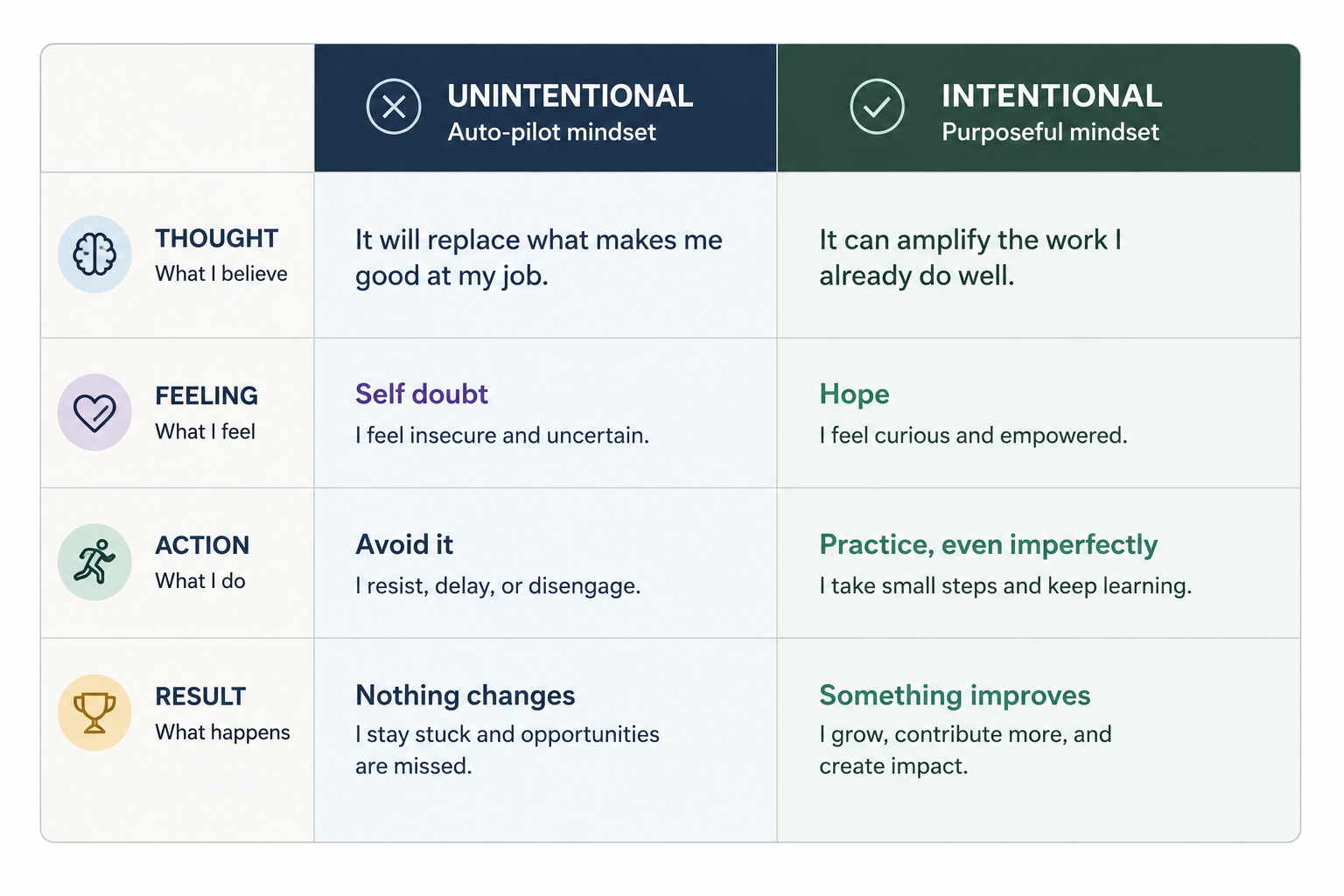
The tool didn’t change between those two scenarios. The thought did.
This is also where most advice about AI falls short. It assumes you need to master the mechanics before you start. You didn’t learn to delegate to a team member by reading a manual on delegation first. You did it once, imperfectly, and adjusted. AI works the same way. A messy, half formed request isn’t a step you skip. It is the method
A QUESTION WORTH SITTING WITH
Before you open another AI tool this week, try this instead. Take thirty seconds and notice the thought you are actually carrying about AI, not what you think you should believe, but what is genuinely there.
Then ask yourself:
• What feeling does that thought create?
• What action has it led you to take, or avoid?
• What result have you been getting because of it?
If you like what you find, keep going. If you don’t, you don’t need a new strategy. You need a new thought, one you can actually believe, even a little – maybe just maybe. Something closer to “I can learn this in small, imperfect steps” tends to open more doors than “I should already know this by now.”
YOUR NEXT ALIGNED STEP
You don’t have to overhaul your week or your workflow. You only have to notice the thought that’s been running quietly in the background, and decide whether it’s still serving you.
“AI should make us more human, not less.”